Belgium Travel, Structured Around Brussels, Bruges, Ghent and Rail
Plan Belgium through Brussels, Bruges, Ghent, Antwerp, beer culture, chocolate, museums, architecture, rail day trips, hotels and compact city routes.
Start Planning BelgiumBelgium Travel Guide: Routes, Stay Bases, Culture and Experiences
Trip shape: The best way into Belgium is to choose the rhythm before choosing the extras. Let Brussels, Bruges, Ghent and Antwerp carry the easy first days, then use Flanders, Wallonia, Ardennes and First Belgium Trip for depth when the schedule has enough space.
Best for: Flanders, Wallonia, Ardennes and First Belgium Trip give Belgium its deeper travel layer. Some visitors need one main city and one day trip; others should slow down, split the journey and give the strongest region its own nights.
Planning rule: Start with arrival logic, season and the first overnight point, then add the experiences that genuinely deserve advance planning. Museums, landmarks, guided tours, food walks, local neighbourhoods and coastal or countryside days should be grouped by geography and timing.
Route logic: Beer styles, casual brasseries and local bars are part of the cultural route, not only evening extras. Sweet stops work best as neighbourhood breaks while walking old towns. Keep food close to the chosen hotel area where possible: the best meals often come from market streets, harbour areas, old-town restaurants and neighbourhoods already inside the day’s route.
Brussels: grand squares, museums and Belgian arrival base
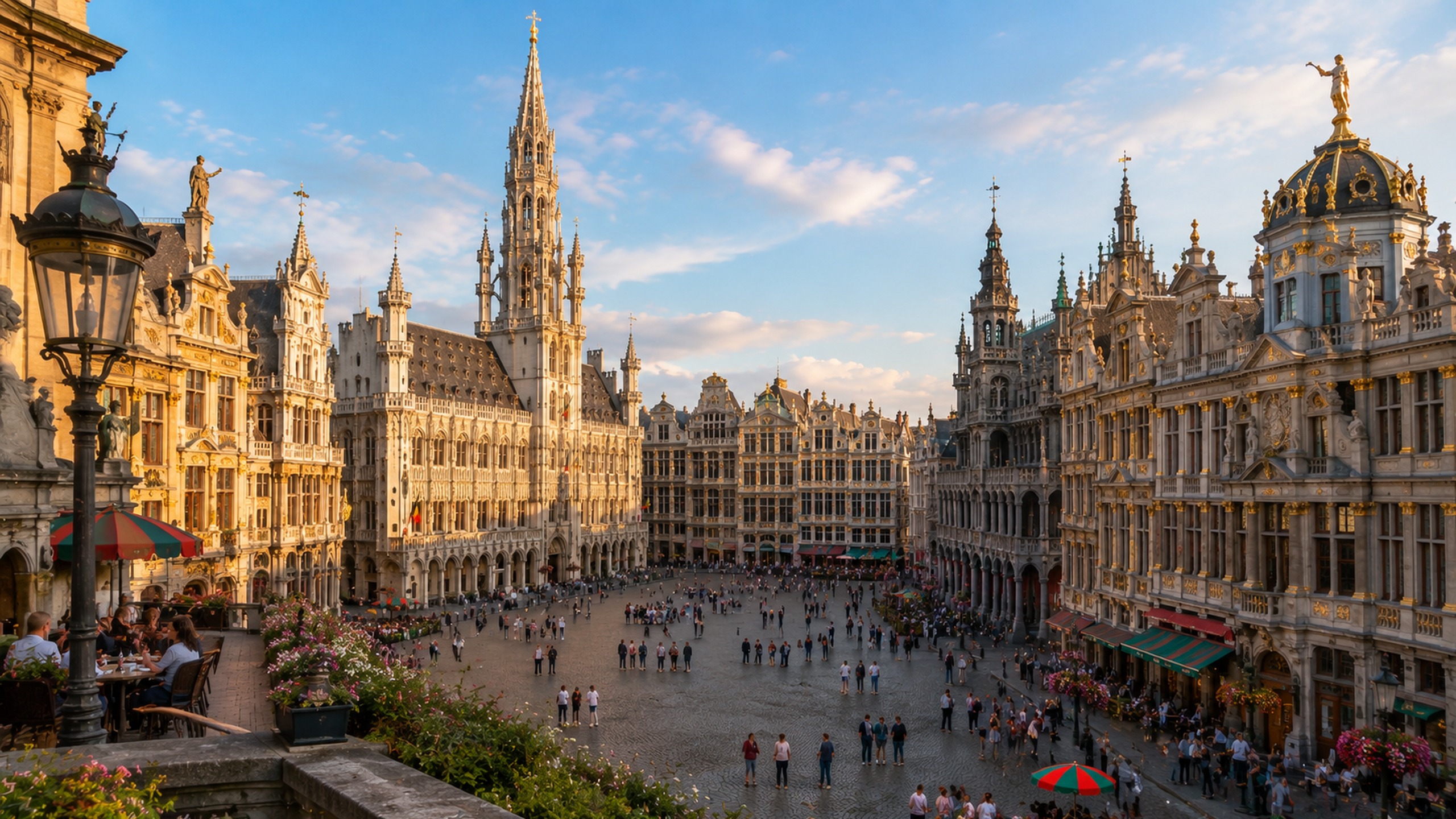
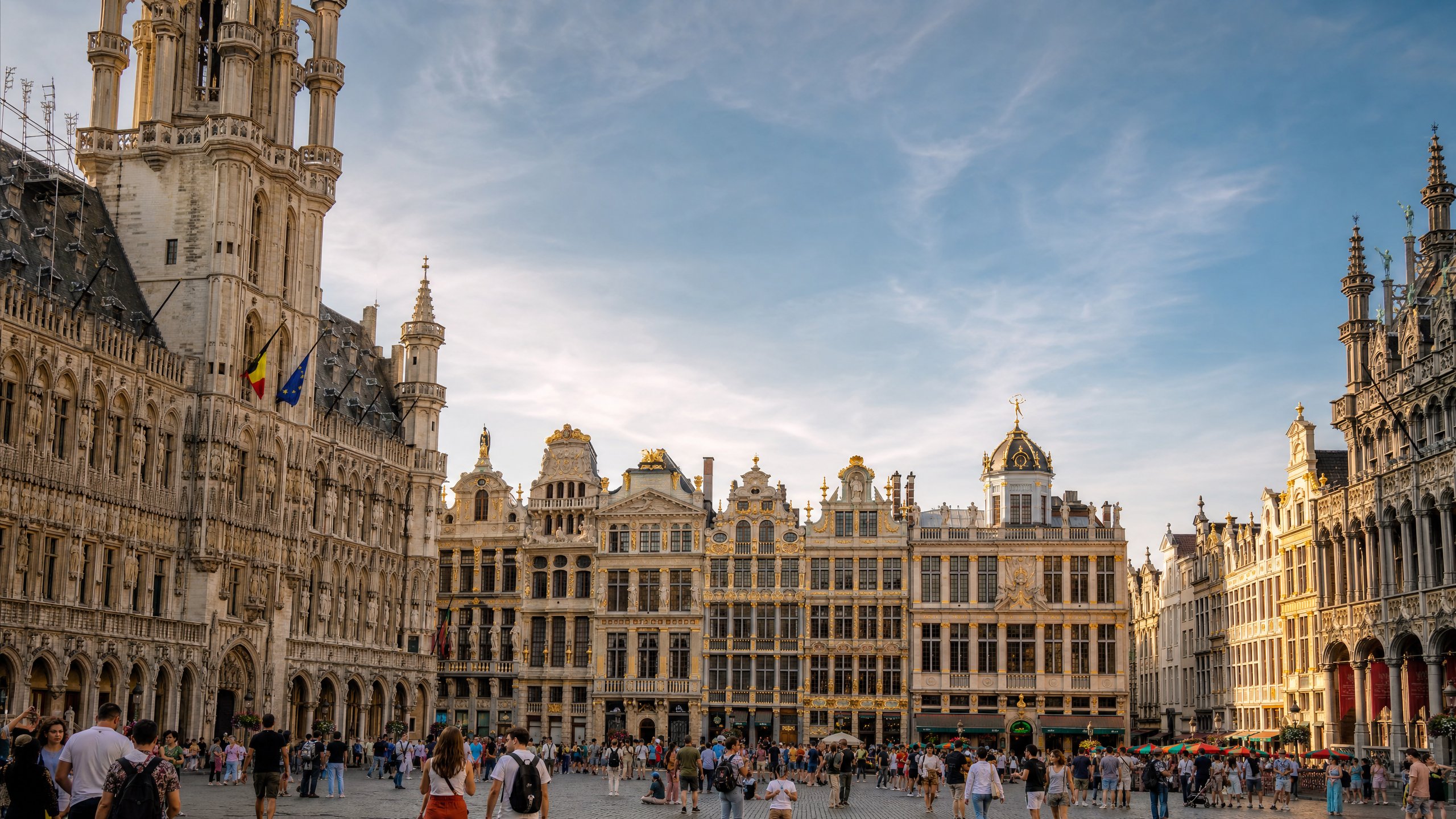
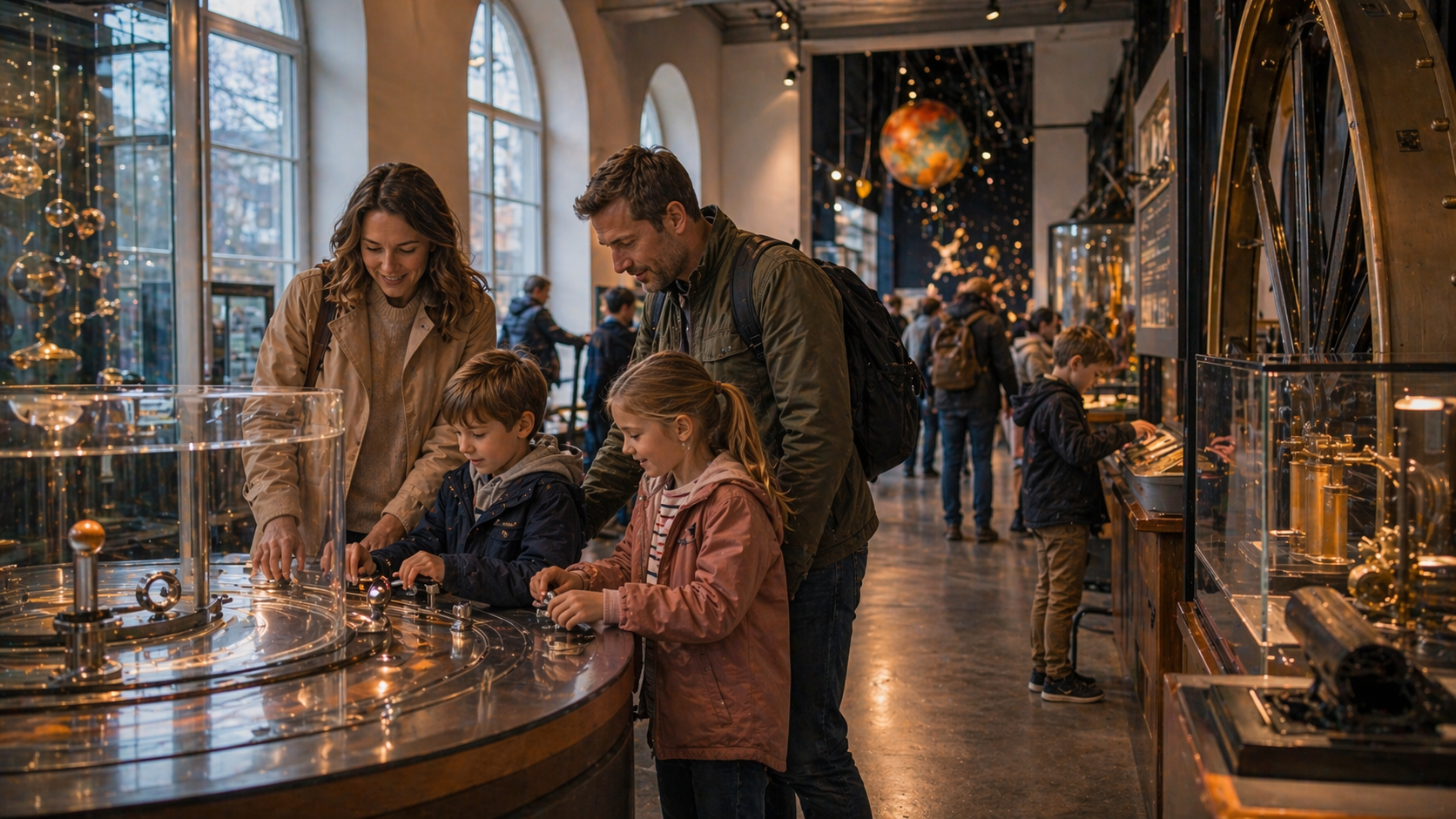
Best for: For Brussels, the first decision is pace: give the city enough room to show its grand squares, museums and Belgian arrival base. Brussels is the practical starting point for Belgium, with major rail links, the Grand Place, museums, Art Nouveau streets and easy day trips to other cities. It works best when the stay balances civic sights, food streets, comic-strip or art museums and one rail-linked day rather than treating the city only as an arrival point.
Historic landmarks: Grand Place, Royal Museums of Fine Arts, Mont des Arts, Atomium, Magritte Museum and Horta Museum should shape the sightseeing plan. Visit by day and evening if staying centrally. Choose the collection that fits the trip rather than rushing all sections.
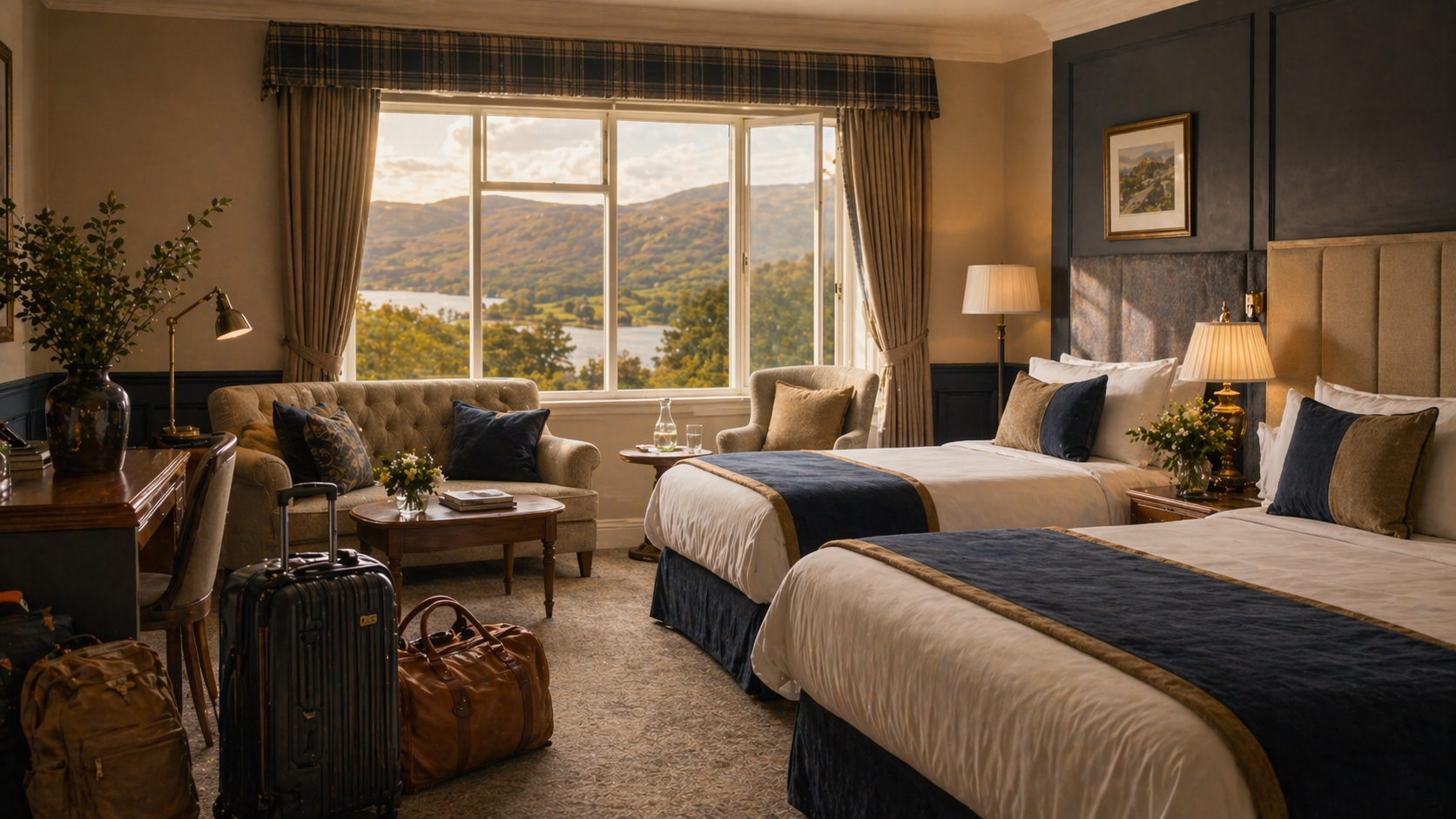
Museums and attractions: Choose the hotel area around Grand Place / Central Station, Sablon and Saint-Gilles. Pick the district that makes arrival, evening movement and the first full day easier.
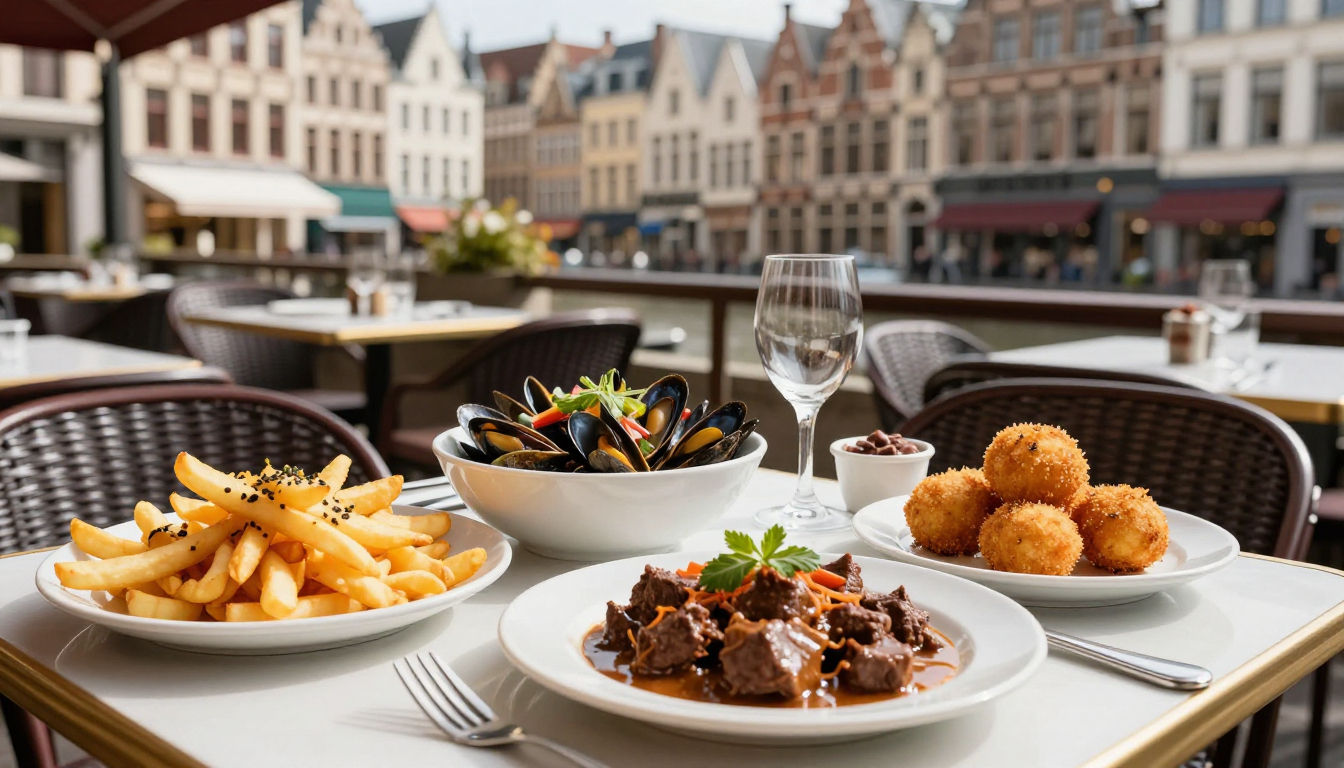
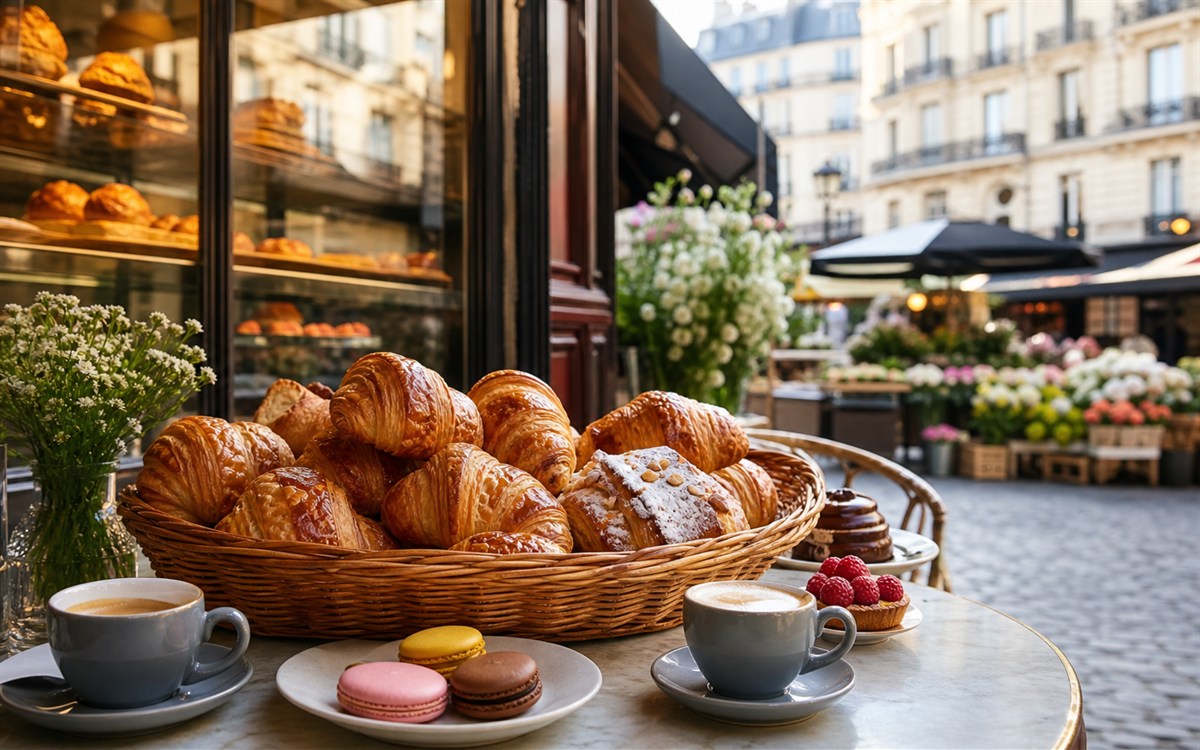
Hotels and stay areas: Brussels also needs a food layer. Build meals around moules-frites, Belgian fries, waffles, pralines, lambic beer, stoemp, Grand Place and Îlot Sacré and Sablon so the visitor has a reason to slow down between museums, viewpoints and transfers.
Food and restaurants: Bruges or Ghent and Antwerp can extend the stay when there is enough time. Both are easy rail additions, but they deserve a focused day each. A strong design, fashion and museum contrast from Brussels.

Bruges: canals, medieval streets and romantic Belgium
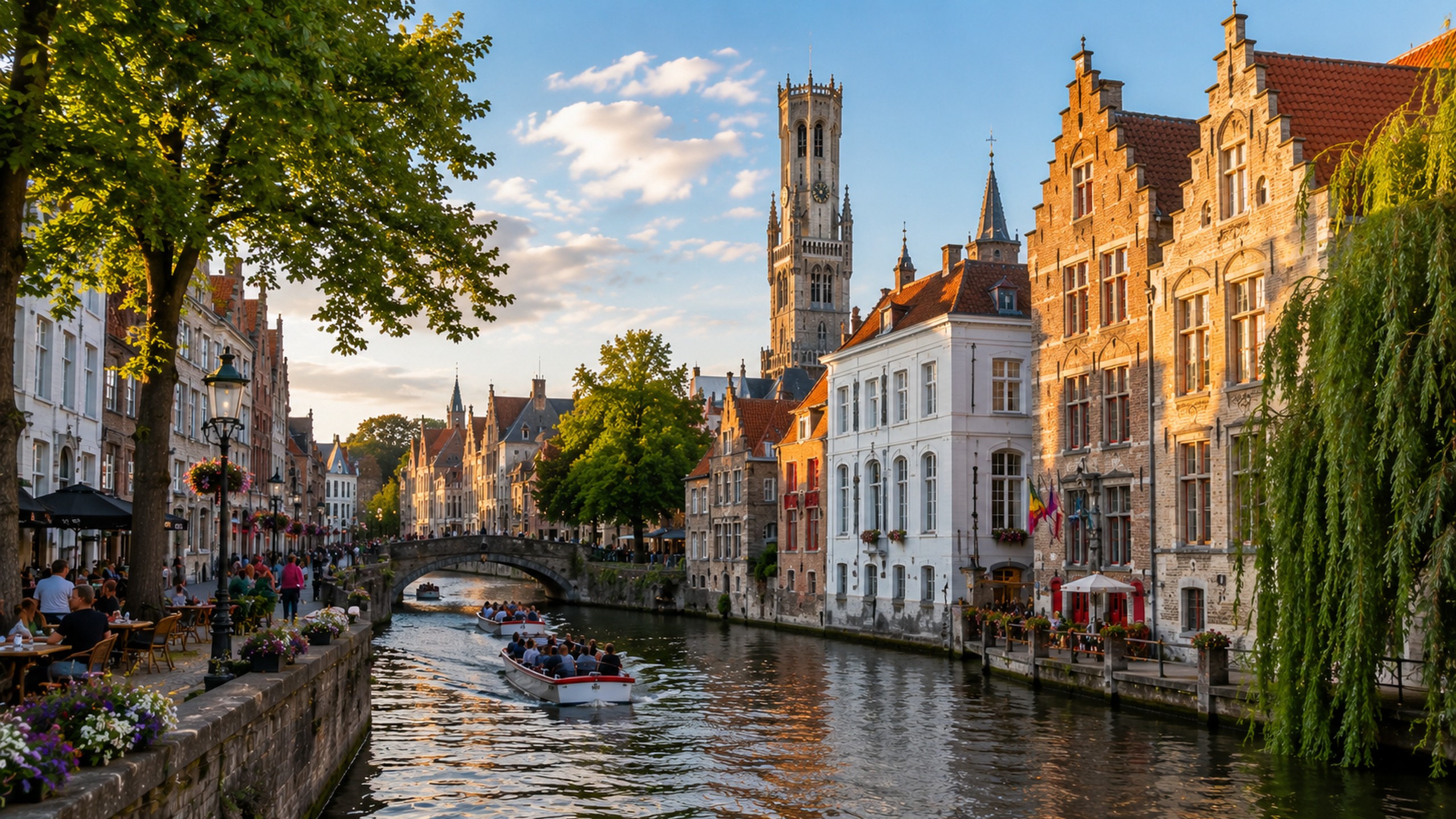
Best for: Bruges deserves a proper place in the Belgium plan, especially when the trip needs canals, medieval streets and romantic Belgium. Bruges is the most atmospheric Belgian old-town stay, with canals, guild houses, church art, chocolate shops and quiet early or late walks once day-trippers thin out. Use it for a slower heritage break where hotel location, canal walks, museums and evening meals matter more than rushing between Bruges, Ghent and Brussels in one day.
Historic landmarks: Markt and Belfry, Canal Walks and Boat Routes, Burg Square and Basilica of the Holy Blood, Minnewater and Begijnhof, Groeningemuseum and Church of Our Lady should shape the sightseeing plan. Visit early or late for a calmer feel. Treat a boat route as orientation, then walk the smaller streets.
Museums and attractions: Choose the hotel area around Historic Centre, Station Edge and Sint-Anna. Pick the district that makes arrival, evening movement and the first full day easier.
Hotels and stay areas: Bruges also needs a food layer. Build meals around Belgian chocolate, waffles, moules-frites, local beer, speculoos, Flemish stew, Markt and Burg Area and Sint-Anna Quarter so the visitor has a reason to slow down between museums, viewpoints and transfers.
Food and restaurants: Ghent and Belgian Coast can extend the stay when there is enough time. A lively historic city that pairs well with Bruges without repeating the same mood. Useful in warmer months if the trip needs sea air and a softer day.
Ghent: canals, students and lived-in Flemish culture
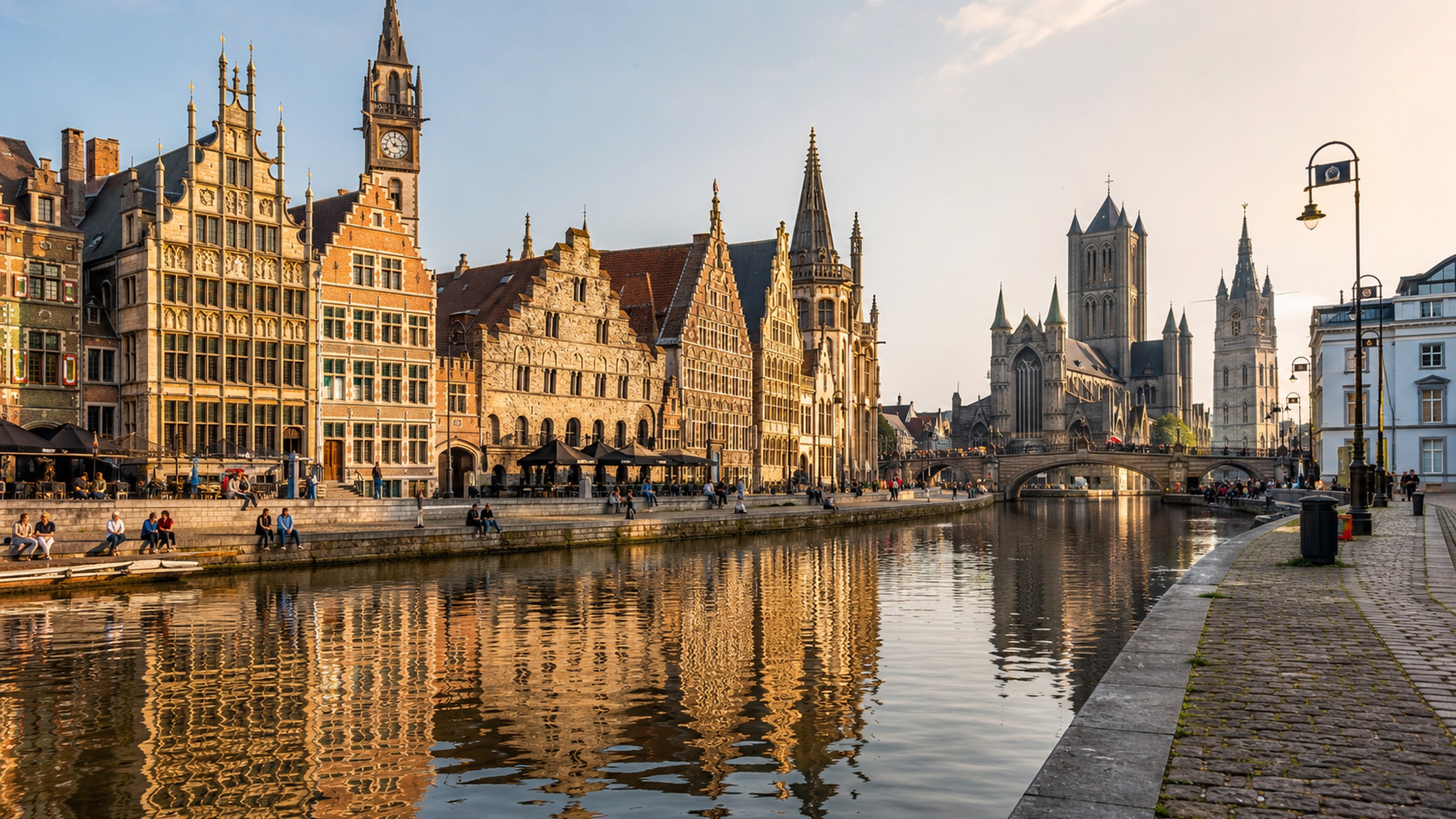
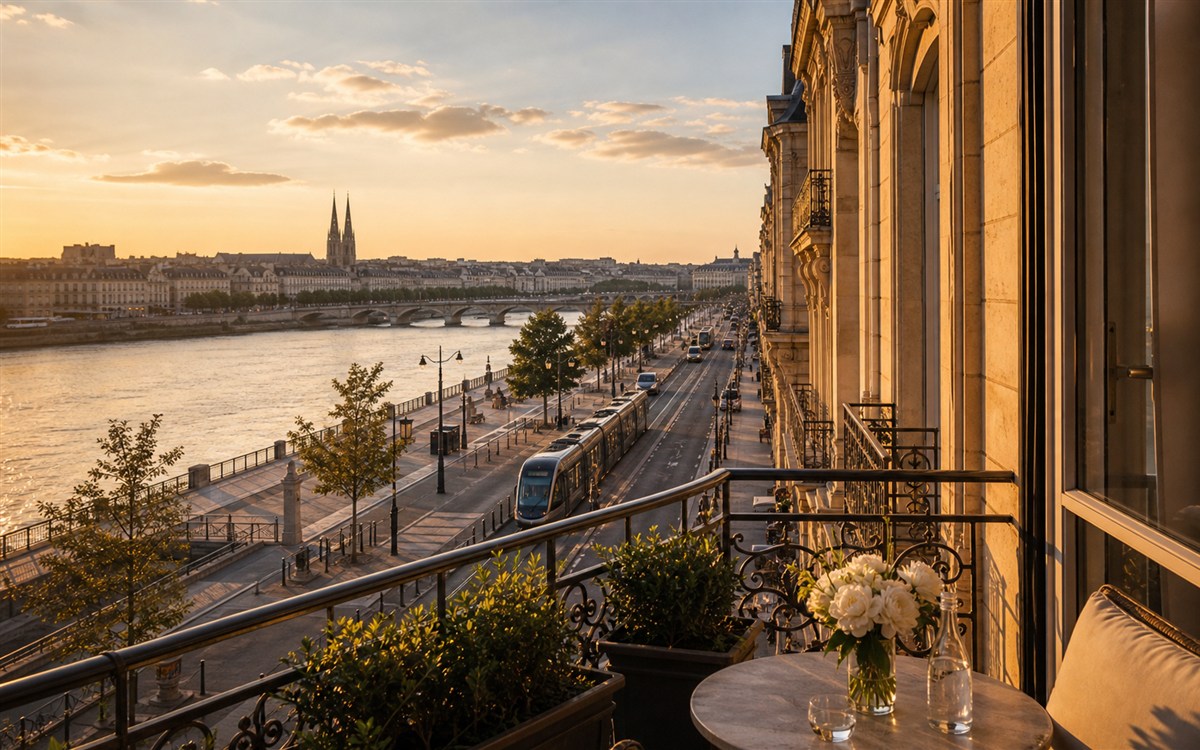
Best for: Ghent deserves a proper place in the Belgium plan, especially when the trip needs canals, students and lived-in Flemish culture. Ghent balances medieval scenery with student energy, good museums, canals and food areas, making it a strong alternative or complement to Bruges. It suits travellers who want old-town architecture without the same postcard pressure, with castle time, waterside streets, design shops and relaxed dining arranged around a walkable centre.
Historic landmarks: Gravensteen Castle, Graslei and Korenlei, St Bavo’s Cathedral, Patershol, Museum of Fine Arts Ghent and STAM Ghent City Museum should shape the sightseeing plan. Use it with the old harbour area nearby. Return in the evening for a different mood.
Museums and attractions: Choose the hotel area around Historic Centre, Station / Citadel Park and Patershol. Pick the district that makes arrival, evening movement and the first full day easier.
Hotels and stay areas: Ghent also needs a food layer. Build meals around waterzooi, Flemish stew, cuberdons, Belgian fries, local beer, Patershol, Graslei and Korenlei and Student District so the visitor has a reason to slow down between museums, viewpoints and transfers.
Food and restaurants: Bruges and Antwerp can extend the stay when there is enough time. A close rail link for a contrasting canal-town day. Adds fashion, design and port-city scale to the Flemish route.
Plan this part of the trip
Antwerp: fashion, art, port energy and Flemish design
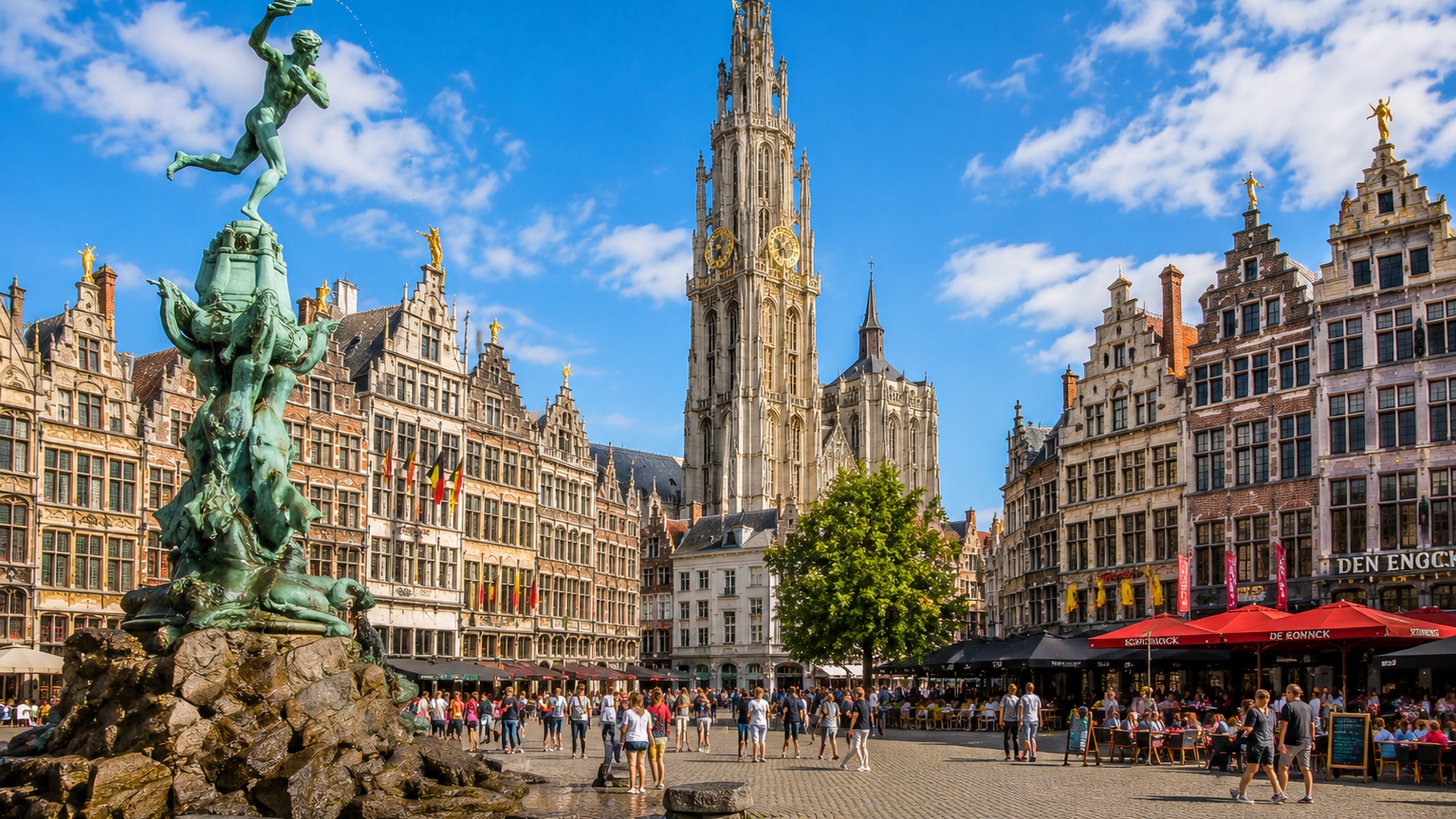
Best for: For Antwerp, the first decision is pace: give the city enough room to show its fashion, art, port energy and Flemish design. Antwerp gives Belgium a sharper urban edge, with Rubens heritage, fashion, design shops, a major station and port-city neighbourhoods. It works best as a culture-and-style city break where the station arrival, cathedral area, museums, fashion district and harbour-linked neighbourhoods are grouped by area rather than skimmed as a quick stop.
Historic landmarks: Antwerp Central Station, Grote Markt and Cathedral, MAS Museum and Eilandje, Mode District, Rubens House and Plantin-Moretus Museum should shape the sightseeing plan. Use the station area as part of the city experience, not just transit. Pair with the Old Town and riverfront.
Museums and attractions: Choose the hotel area around Old Town, Central Station Area and Zuid. Pick the district that makes arrival, evening movement and the first full day easier.
Hotels and stay areas: Antwerp also needs a food layer. Build meals around Antwerpse handjes, Flemish stew, Belgian beer, chocolate, seafood, coffee bars, Old Town and Eilandje so the visitor has a reason to slow down between museums, viewpoints and transfers.
Food and restaurants: Brussels and Ghent can extend the stay when there is enough time. Easy by rail and useful for international arrivals. A strong contrast if building a Flemish city sequence.
Food, Culture and Route Ideas for Belgium
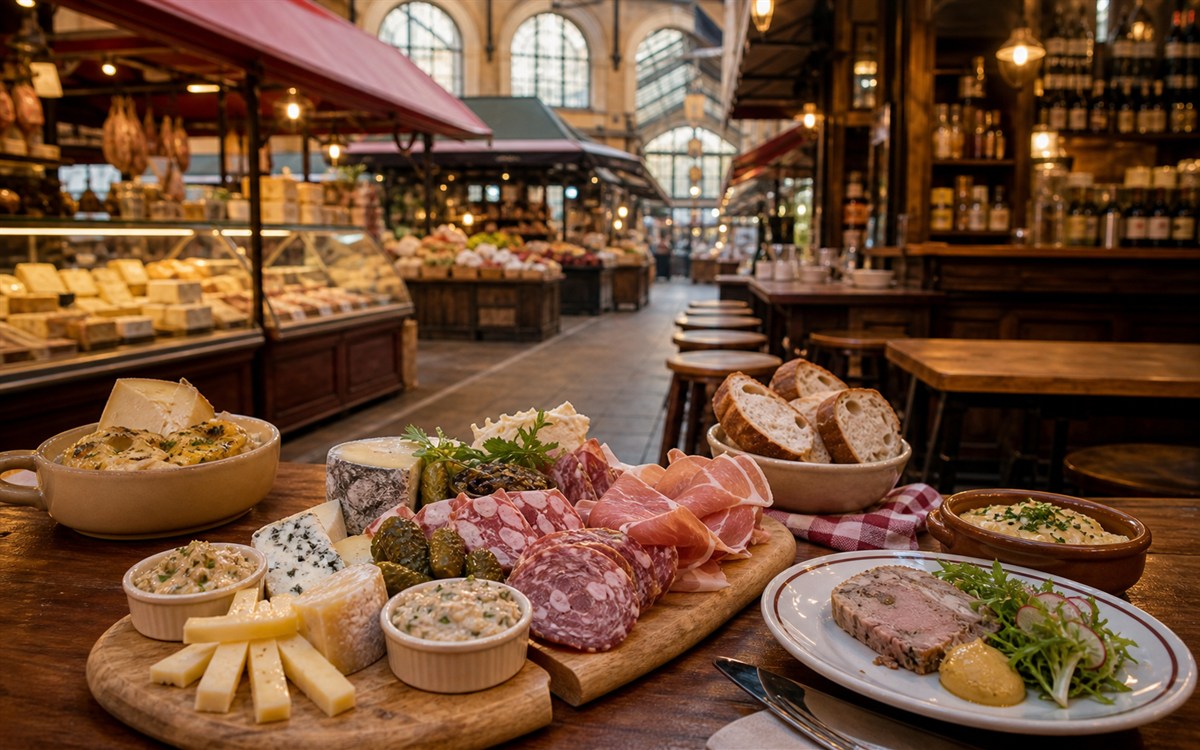
Food route: Beer styles, casual brasseries and local bars are part of the cultural route, not only evening extras. Sweet stops work best as neighbourhood breaks while walking old towns. Grand squares, guildhalls and terraces define how many Belgian city days naturally unfold. This is where food, culture and route planning should work together.
Food, wine and restaurants: Build meals around moules-frites, Belgian fries, waffles, pralines, lambic beer, stoemp and Belgian chocolate and keep them close to Grand Place and Îlot Sacré, Sablon, Saint-Gilles and Ixelles, Markt and Burg Area and Sint-Anna Quarter.
Popular experiences: Use Brussels for arrival and museums, then add Bruges or Ghent depending on whether the trip is romantic, food-led or architecture-led. Bruges, Ghent and Antwerp can form a strong rail route without changing country scale too often. Keep the route disciplined: one clear hotel area, one strong regional layer and one food or culture experience will usually feel better than trying to touch every possible stop.
Planning rule: Use bookings in a clean order: choose the hotel area first, then add attraction tickets, food tours, guided days and local experiences where they make the journey easier, richer and more realistic.